
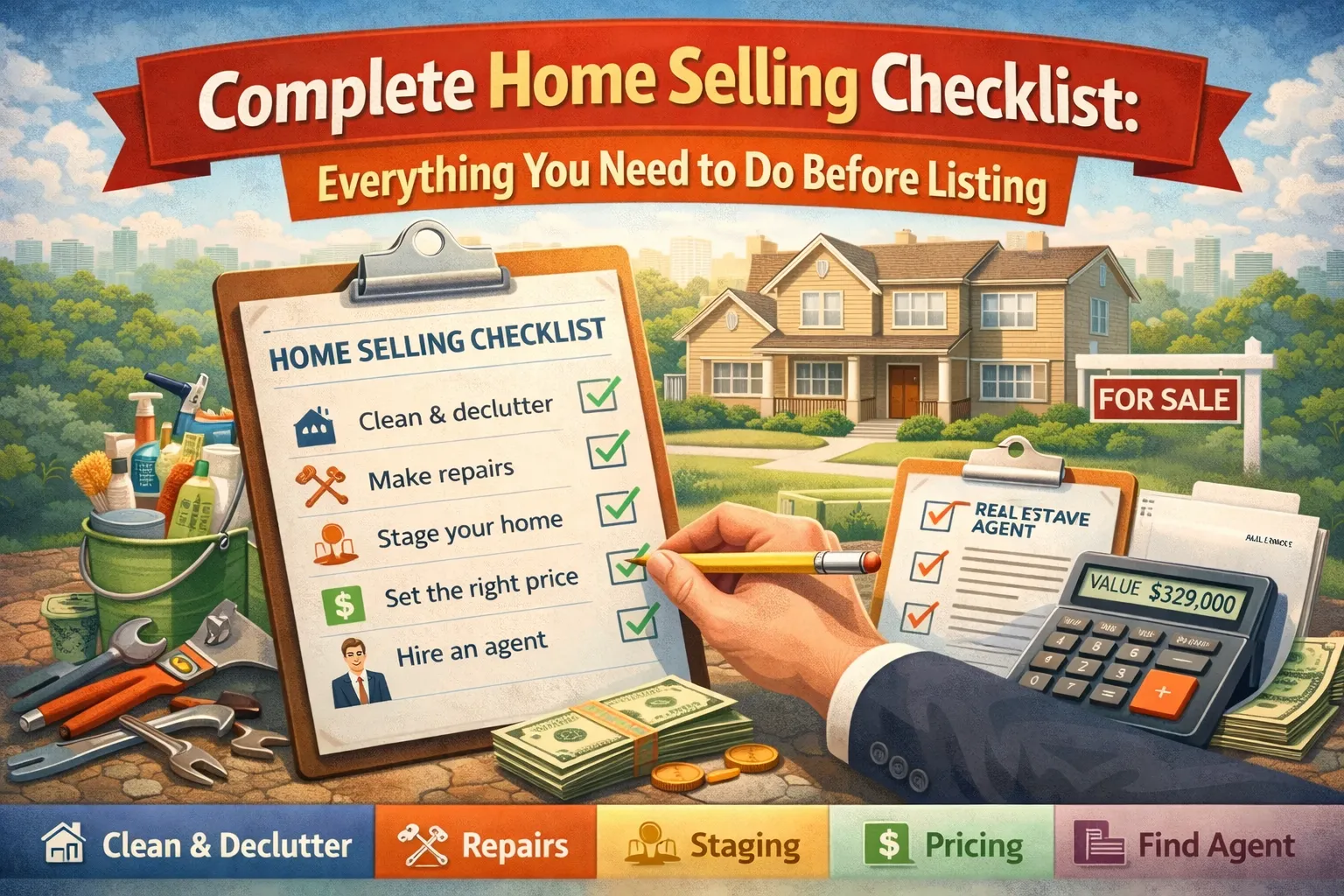
Selling a home is the single largest financial transaction most Americans will ever make, yet far too many homeowners rush into it without a clear plan. They list too early, skip critical repairs, or price emotionally—and end up leaving tens of thousands of dollars on the table or watching their listing sit unsold for months.
This complete home selling checklist is the exact step-by-step roadmap experienced agents and top-producing sellers follow to maximize proceeds and minimize stress. Follow it in order, and you’ll avoid the most common (and expensive) mistakes.
1. Decide If You’re Really Ready to Sell
Before you spend a dime on staging or repairs, answer these questions honestly:
- Do you have a firm next-move plan (new home under contract, rental lined up, temporary housing arranged)?
- Can you carry two mortgages for 60–90 days if needed?
- Are you emotionally ready to let strangers walk through your home and criticize it?
If the answer to any of these is “no,” pause. The 2025–2026 market still has low inventory in many metro areas, but buyer scrutiny is higher than it was in 2021–2022. Homes that aren’t 100% ready get punished with lowball offers or simply ignored.
2. Choose the Right Time to List (2025 Edition)
National Association of Realtors data shows homes listed in the first two weeks of May sell 18% faster and for 1.8% more money than the yearly average. But local timing matters more than national averages.
Hot seasons by region (2026 projections):
- Northeast & Midwest: April 15 – June 15
- South & Southeast: February – May
- West Coast: March – June
- Mountain states: April – July
Avoid listing right before major holidays (Thanksgiving week through January 5) unless you’re in a warm-weather retirement market like Phoenix or Naples.
3. Hire the Right Agent (or Decide to Go FSBO)
Full disclosure: 89% of sellers still use an agent (NAR 2026), and they net $83,000 more on average than FSBO sellers after commissions. But the key word is the right agent.
Red flags when interviewing agents:
- Quotes a list price $50k+ above the other two comps-based opinions
- Won’t provide a detailed 90-day marketing plan in writing
- Has fewer than 15 closed transactions in your price band in the last 12 months
Ask for their “days on market” vs. the MLS average in your neighborhood and their list-to-sale price ratio. Top 10% agents typically sell in 60–70% fewer days and for 101–103% of list price.
4. Get a Pre-Listing Home Inspection ($450–$750)
This is the single smartest $600 you’ll ever spend. A pre-inspection lets you:
- Fix items proactively (on your schedule and contractor choice)
- Disclose known issues credibly instead of facing renegotiation after buyer inspection
- Avoid the deal-killing surprise that blows up 15–20% of contracts
Sellers who fix items upfront net 2–3× the repair cost in higher sale price (2024 Redfin study).
5. Complete Strategic Repairs and Upgrades
Not all dollar-for-dollar returns are equal. 2024–2025 Cost vs. Value (Remodeling Magazine) winners:
High-ROI projects (80–100%+ return):
- Minor kitchen remodel (new countertops, cabinet refacing, new appliances) – 96% return
- Garage door replacement – 194% return
- Manufactured stone veneer (lower third of house) – 153% return
- Steel entry door replacement – 188% return
- Vinyl or fiber-cement siding replacement – 88–94% return
Low-ROI projects to skip unless broken:
- Major kitchen remodel (<60% return)
- Master suite addition (<55% return)
- Upscale bathroom remodel (<58% return)
6. Declutter, Depersonalize, Deep Clean
The transformation sequence that costs almost nothing yet adds $10k–$40k to proceeds:
Phase 1 (4–6 weeks before photos):
- Remove 50–70% of furniture
- Pack away all family photos, trophies, collections
- Remove all religious and political items
- Clear every surface—kitchen counters, bathroom vanities, bookshelves
Phase 2 (1 week before photos):
- Rent a 10×20 storage unit ($150–$250/month)
- Professional deep clean ($400–$800 depending on size)
- Carpet cleaning or replacement if stained ($300–$600)
7. Professional Staging (The $15,000–$50,000 Decision)
Staged homes sell for 6–20% more and in 73% less time (2024 Real Estate Staging Association study).
2025 staging costs (average U.S. metro):
- Vacant home full staging: $4,000–$12,000 initial + $2,000–$4,000/month
- Occupied home “light” staging/editing: $2,500–$6,000 one-time
Many top agents now pay for the first month of staging to align incentives.
8. Professional Photography, Video, and 3D Tour
89% of buyers say high-quality photos are the most important feature online (NAR 2024).
Minimum package you should accept:
- 35–50 HDR photos (twilight exterior set mandatory in 2025)
- 4K cinematic video tour or Zillow 3D Home tour
- Floor plan with measurements
- Drone photos (especially for homes with large lots or views)
Budget: $500–$1,500 depending on home size and market.
9. Set the Correct List Price (The Make-or-Break Decision)
The pricing sweet spot is the overlap of three data points:
- Comparable sales (last 90 days, same school district, similar condition/size)
- Active competition (what failed to sell and why)
- Pending sales (the true indicator of current market value)
Most accurate pricing strategy in 2025 balanced markets: Price at or just below the highest realistic comparable sale, not above.
10. Understand Your True Selling Costs
Average U.S. seller paid 9.36% of sale price in total costs in 2024 (Clever Real Estate). Breakout for a $500,000 sale:
- Agent commissions: 5.32% → $26,600
- Seller concessions/repairs: 1.84% → $9,200
- Transfer taxes: 0.6–1.8% → $3,000–$9,000
- Title insurance & escrow: 0.7% → $3,500
- Staging, photos, repairs, moving: 1–2% → $5,000–$10,000
Total typical range: $47,300–$58,300 on a $500k sale
11. Prepare All Paperwork in Advance
Have these documents scanned and ready before listing:
- Property tax bill (last 2 years)
- HOA docs, bylaws, recent meeting minutes (if applicable)
- Utility bills (12-month history)
- List of capital improvements with dates and costs
- Floor plan and survey (if you have them)
- Pre-inspection report and receipts for completed repairs
- Payoff quote from lender (good for 30 days)
12. Plan Your Move Logistics
Top sellers book movers 8–10 weeks before listing because the best companies are fully booked in peak season.
If selling before buying, popular bridge solutions (2026):
- Knock Home Swap
- Ribbon
- Opendoor/Offerpad (in select markets)
- Local iBuyer programs
Expert Tips Most Sellers Never Hear
- Get the smell right – Nothing kills a sale faster than pet odors or curry smells baked into walls. Budget $1,500–$3,000 for professional ozone + enzyme treatment plus fresh paint if needed.
- Offer a home warranty – Costs $450–$650 but reduces buyer nitpicking and post-inspection renegotiation by 40%.
- Remove window screens for photos – Instantly makes rooms look 30% brighter.
- Replace every burnt-out bulb with the same color temperature (4000K daylight is best for photos).
- Have a “lender letter day” – Require all buyers to submit pre-approval from your preferred lender plus two others. Catches the 25% of pre-approvals that fall apart in underwriting.
Frequently Asked Questions
Q: How long does it really take to prepare a house for sale?
A: 6–12 weeks if doing it right. Rushing the process is the #1 reason homes sell for less.
Q: Should I sell first or buy first in 2025?
A: Sell first in almost every scenario unless you have substantial cash reserves. Contingent offers are being rejected in most competitive markets.
Q: Is spring still the best time to sell?
A: Yes in 87% of U.S. markets, but the peak listing window has shifted earlier (late February–April) in southern states due to rising temperatures.
Q: How much should I budget for getting my house ready?
A: Rule of thumb: 1–2% of current value for cosmetics and repairs ($10k–$20k on a $1M home) plus staging costs.
Q: Can I sell “as-is” in this market?
A: Yes, but expect 8–15% below market value. Investors are paying cash, but retail buyers still dominate and want move-in ready.
The difference between an average sale and a great sale is rarely luck—it’s preparation. Sellers who follow this complete home selling checklist consistently net $40,000–$100,000+ more than neighbors who “just stick a sign in the yard.”
Take the time to do it right once. Your bank account will thank you.
Written by Hamilton Home Sales Editorial Team
U.S. Real Estate Research & Market Insights